Open Today Sales: 9 AM-9 PM

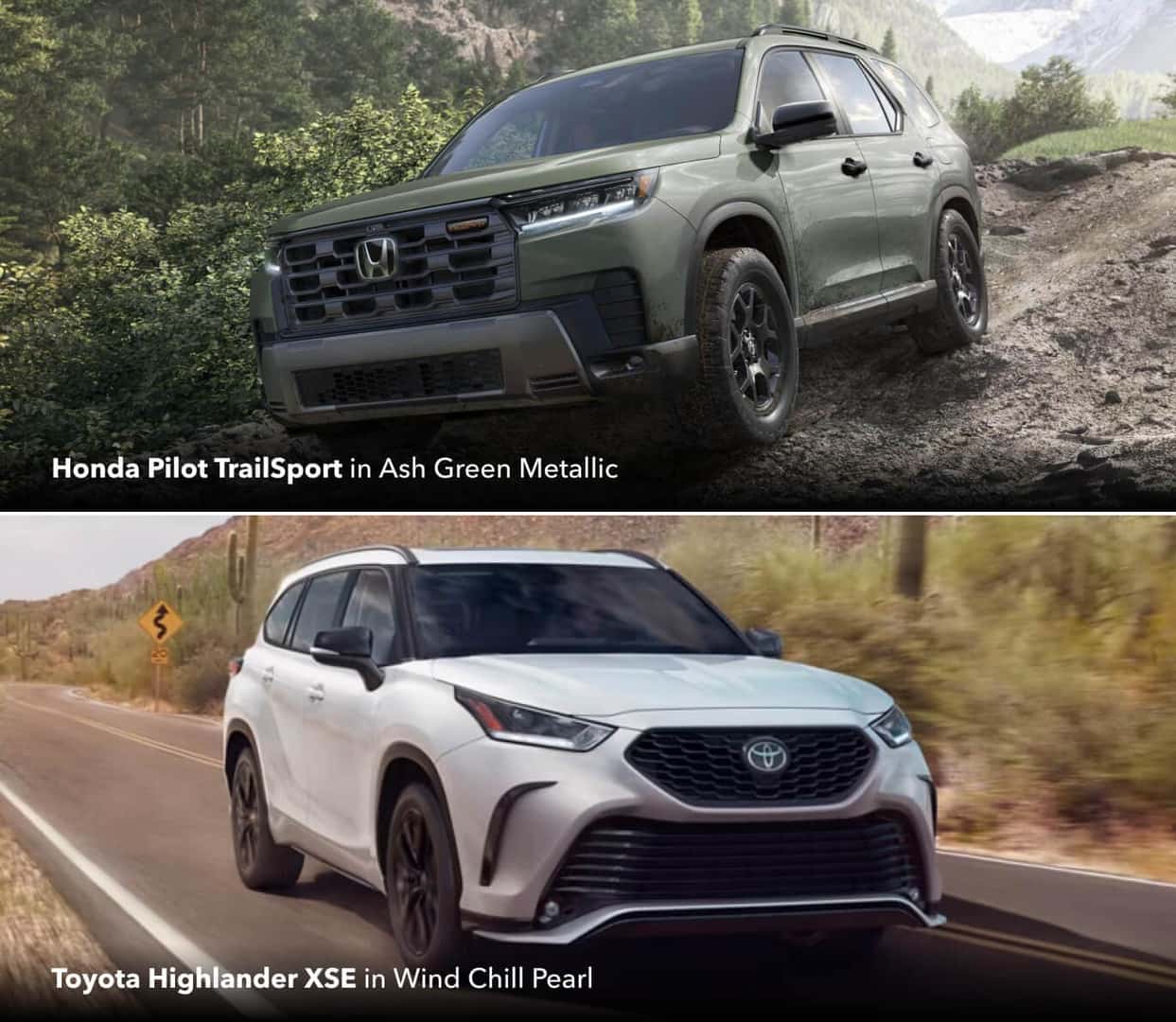
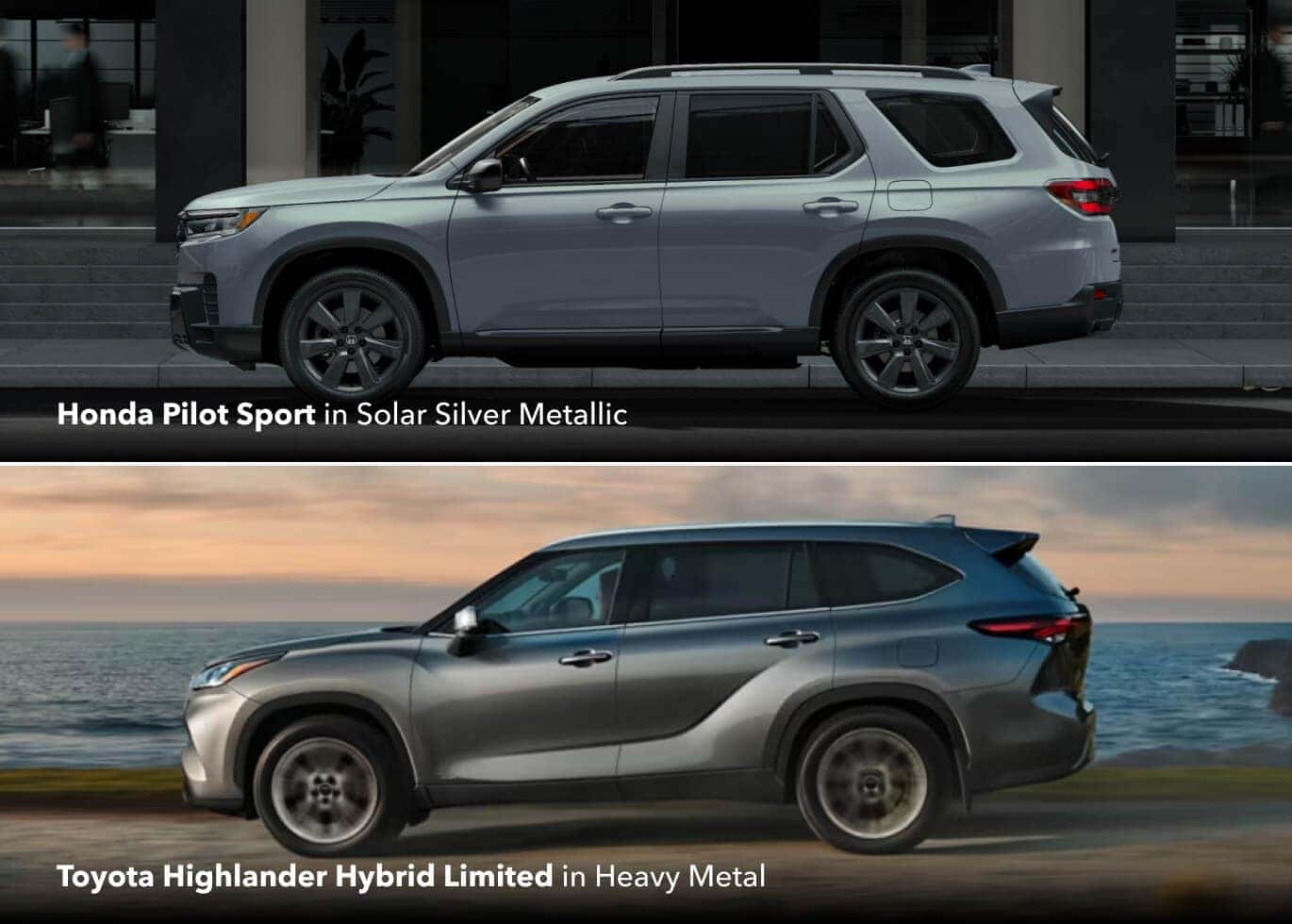
Braman Honda Miami is comparing the gas-powered versions of the Honda Pilot vs. Toyota Highlander because you deserve to know how a new SUV is going to serve you before making an investment. Which three-row design is more practical with kids? Which model holds more groceries, and what kind of safety protections does each SUV provide? Get the answers to these questions – and more – below!
The Pilot takes a commanding lead when it comes to family features. Not only does it have standard eight-passenger seating versus the Highlander model's seven, but five of the Honda Pilot trims also come with a removable middle seat in their second rows – creating some breathing room between passengers – as well as wireless Apple CarPlay® and Android Auto™ connectivity.
The new Highlander has wireless Apple CarPlay®, Android Auto™, and wireless smartphone charging in all four of its gas-powered trims, but that's not a huge advantage, considering the Pilot can charge phones without cables in all but its entry model. The same pattern holds for the panoramic moonroof: it comes standard in every Highlander edition and in most Pilot trims.
Winner: It's a tie!
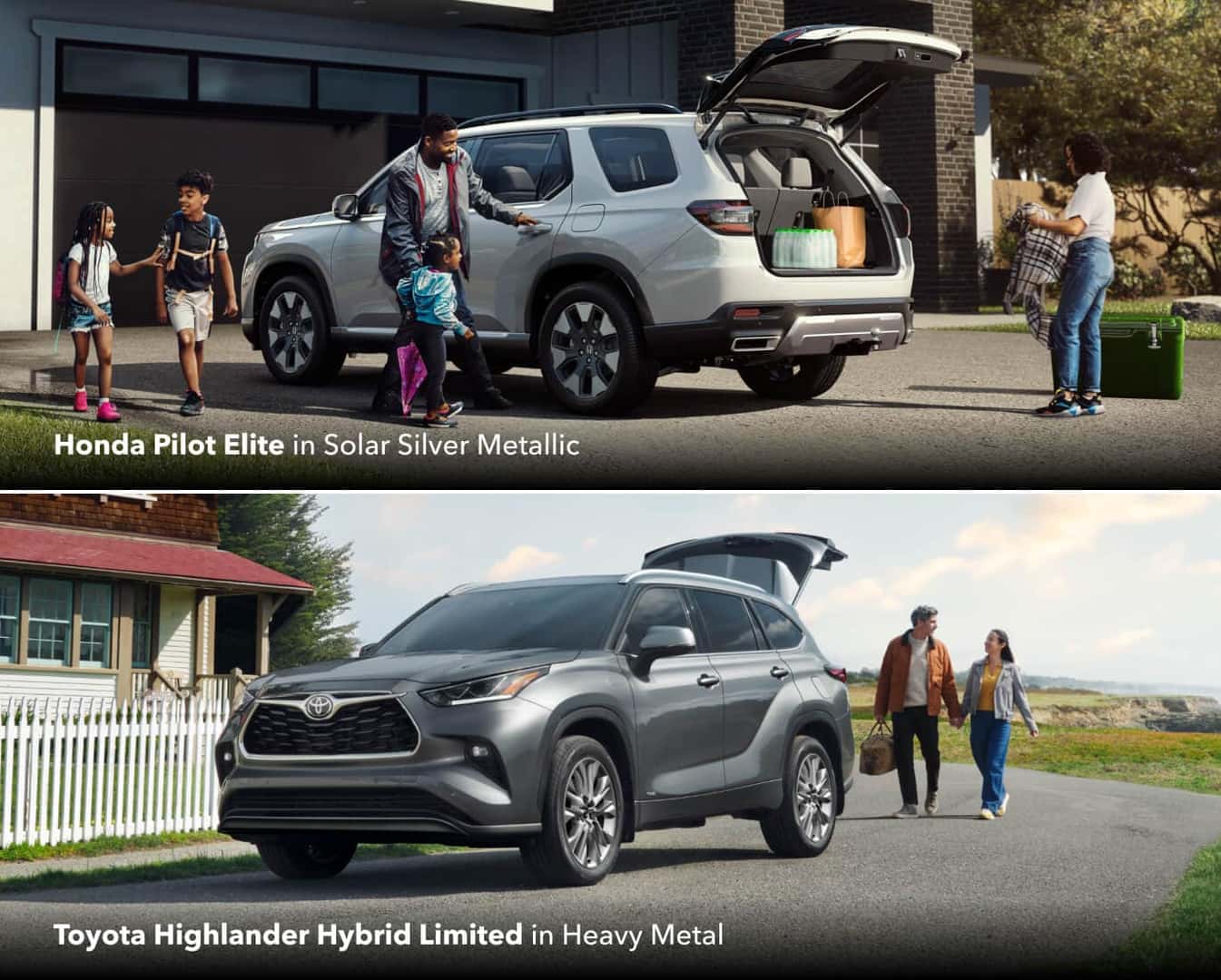
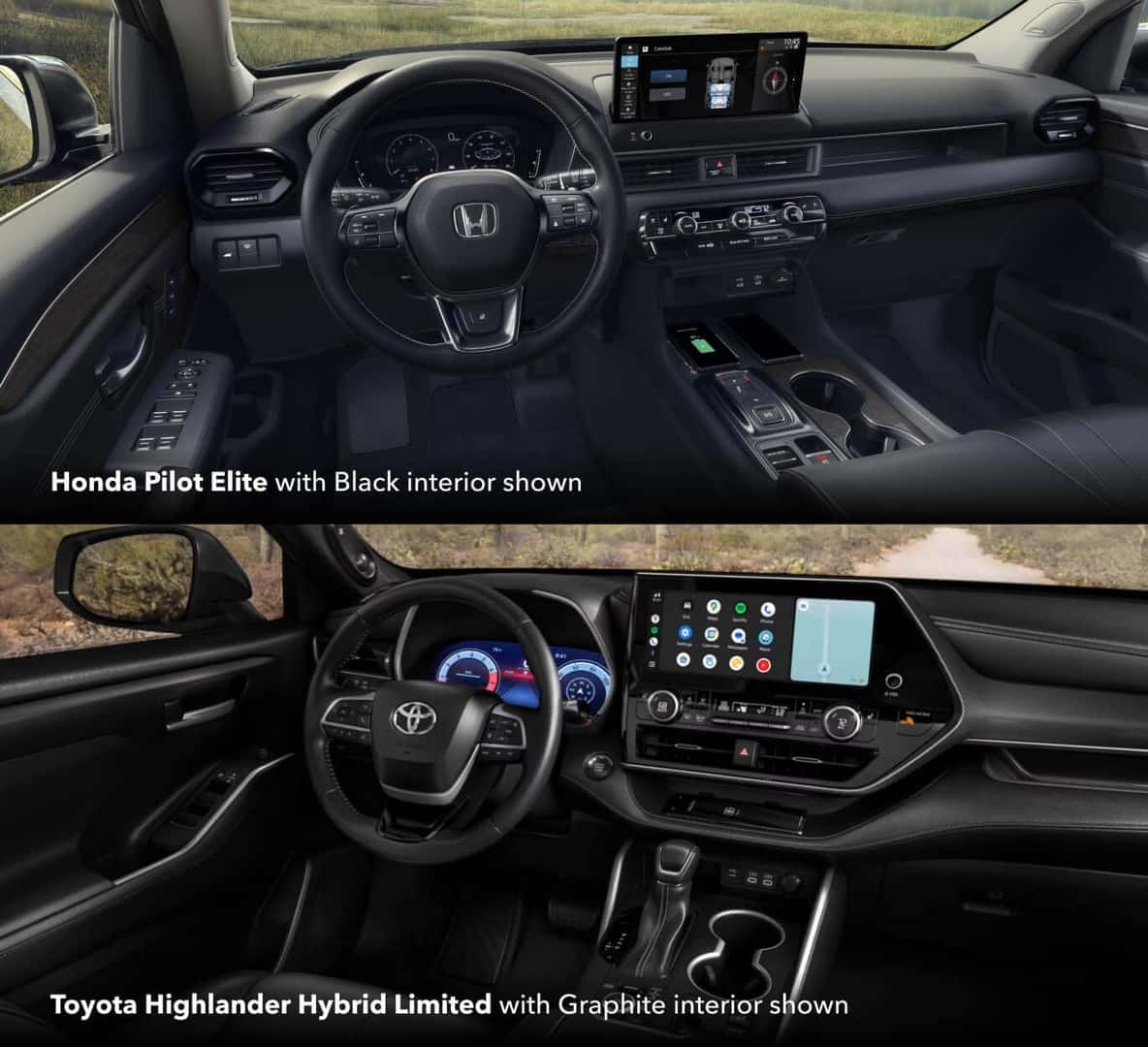
If you're looking for remote engine start, Google Built-In, a power liftgate, and a second row that folds flat at the touch of a button, the 2026 Pilot is your perfect match. Unfortunately, the Highlander's second row does not fold flat; it just tilts and slides. A 10.2-inch digital instrument cluster and a tri-zone automatic climate control system also come standard in every Pilot edition. Heated front seats keep you cozy on chilly mornings – a feature the first two Highlander trims sadly lack – and a ventilated front row can be yours by leasing or purchasing an upper Pilot trim.
In its starter model, the Pilot also has a better touchscreen setup: the 12.3-inch color display is more thoughtful than the Highlander's 8-inch counterpart, though a 12.3-inch screen can be had in the more expensive Toyota trims. As for upholstery, the entry-level Highlander is wrapped in leatherette and offers real leather as you move through the lineup; the entry-level Pilot has cloth covers, but drivers can still select leather-trimmed seating in certain configurations.
Winner: Honda Pilot
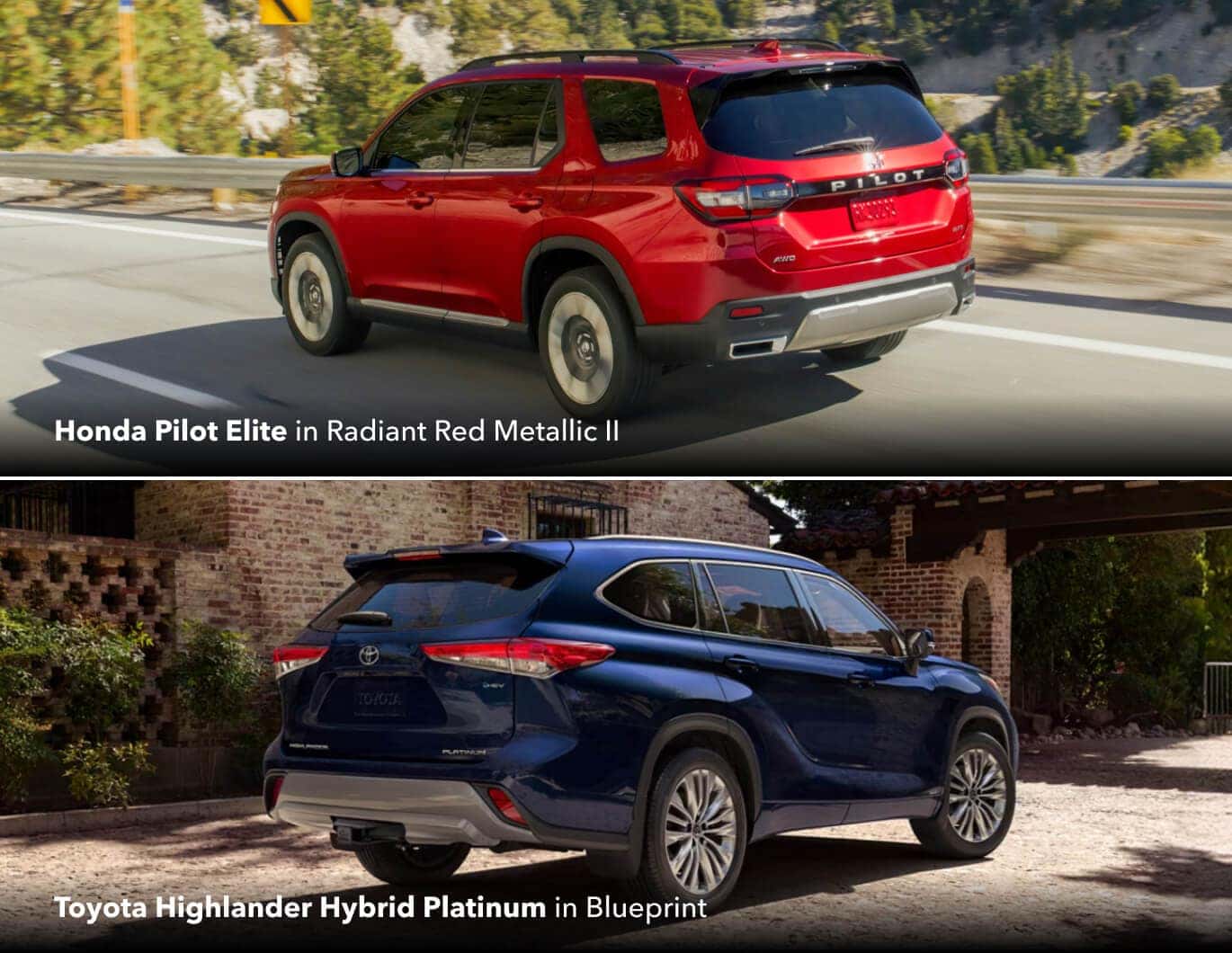
Both SUVs come with 36 months or 36,000 miles of New Vehicle Limited Warranty coverage for extended peace of mind. In the past, the Toyota Highlander has earned high safety ratings from the IIHS, but in 2026, it lost its Top Safety Pick status due to poor crash-test performance.4 We would compare the Toyota SUV's IIHS performance to NHTSA ratings, but strangely, one doesn't exist for this year.
The Honda Pilot, on the other hand, did receive a 2026 IIHS Top Safety Pick award5 and a 2025 five-star NHTSA score.6 We're pointing out this discrepancy because as we'll discover below, both SUVs appear to have robust safety suites, which might lead people to believe that they're equally as secure in an accident (which may not be the case).
Winner: Honda Pilot
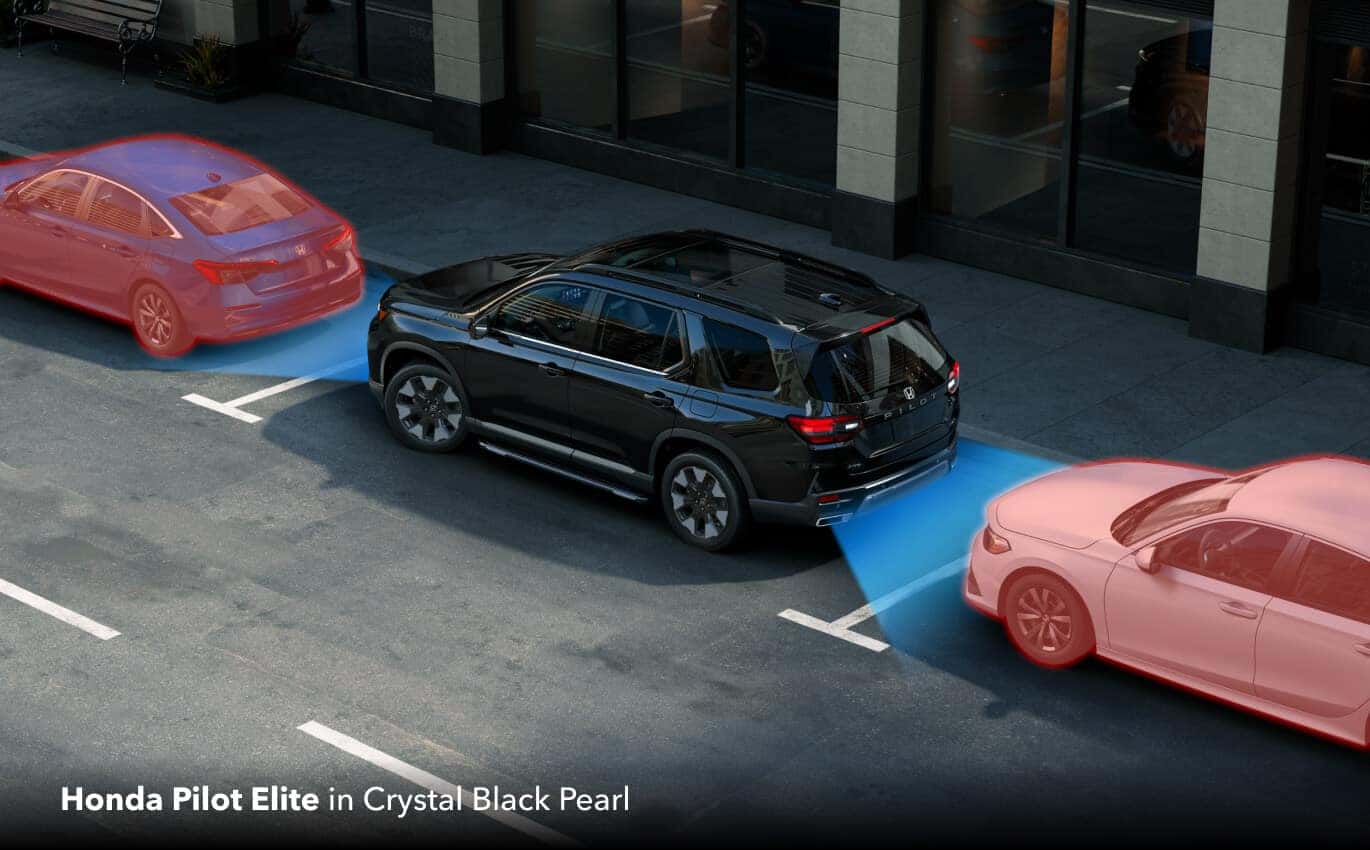
As previously noted, these vehicles are swimming in safety technology. Both offer pre- and post-collision assistance, have three-point seat belts for every occupant, and come with helpful car seat anchors and tethers. To keep your confidence level high, the Pilot and Highlander also have tire pressure monitoring systems, assistance while descending hills, rear seat reminders, and forms of Adaptive Cruise Control.
Winner: It's a tie!
If we strictly look at gas mileage, the Highlander is the better choice, but SUV performance is more nuanced than that. Schedule a test drive of the Honda Pilot to experience the smooth, easy-going power from the V-6 engine and automatic gearbox. It's a comfortable ride, and its noise-cancelling technology makes the new Pilot even more enjoyable.
Active noise cancellation doesn't exist in the Highlander outside of basic sound-dampening materials. Behind the wheel, drivers often report stable and predictable handling, but note that the Highlander isn't particularly fun to drive (and hasn't been since it dropped its V-6 engine in 2023).
In their all-wheel-drive configurations, both the Pilot and Highlander can tow boats and camping gear up to 5,000 pounds,7,8 but adventurous drivers might prefer the Pilot in its TrailSport trim because it comes with skid plates and a hitch receiver.
Winner: Honda Pilot
| Honda Pilot | Toyota Highlander | |
|---|---|---|
| Engine | 3.5L V-6 | 2.4L 4-cyl |
| Transmisson | 10-speed automatic | 8-speed automatic |
| Drivetrain | FWD / AWD | AWD |
| Horsepower | 285 | 265 |
| Torque | 262 lb-ft | 310 lb-ft |
| Maximum Towing Capacity | 5,000 lbs7 | 5,000 lbs8 |
| EPA-Est. MPG (City) | 18 or 19 MPG9 | 21 MPG10 |
| EPA-Est. MPG (Hwy) | 23, 25, or 27 MPG9 | 28 MPG10 |
| Ground Clearance | 7.3 / 8.3 in | 8 in |
As the smaller of the two SUVs, the Highlander has less cargo space, less second-row legroom, and drastically less third-row legroom, making it a much harder sell to families with more than two children. You may be able to squeeze a smaller pre-teen into the Highlander's 28 inches of third-row leg space, but it may be a tight fit.
The bigger-in-overall-size Honda Pilot makes room for long-legged drivers, kids in car seats, and even family pets. In short, it's an easier daily driver for adults who are constantly transporting kids and running errands.
Winner: Honda Pilot
| Honda Pilot | Toyota Highlander | |
|---|---|---|
| Standard Passenger Seating | 8 | 7 |
| Front Headroom | 39.1 or 40.5 in | 39.6 in |
| Front Legroom | 41 in | 42 in |
| Second-Row Headroom | 39.2 or 40.2 in | 39.4 in |
| Second-Row Legroom | 40.8 in | 38.7 in |
| Third-Row Headroom | 39.3 in | 36.1 in |
| Third-Row Legroom | 32.5 in | 28 in |
| Standard Trunk Space | 18.6 cu ft | 16 cu ft |
| Maximum Cargo Capacity | 111.8 - 113.7 cu ft | 84.3 cu ft |
The Toyota Highlander is certainly a reliable SUV, but it's not quite great enough to overpower the Honda Pilot. If a new Pilot is in your future, Braman Honda Miami is here to guide you through the entire car-shopping process, from helping you compare trim levels and select add-on packages to connecting you with our best possible lease and loan incentives. You can even apply for financing through our website if you'd like to see your borrowing power now.
Next time you're in the market for a capable SUV, we hope you'll make our Honda Pilot dealer in Miami, FL, your first stop. We can't wait to introduce you to this ultra-roomy family hauler!
We strongly and confidently believe that the Honda Pilot is the better choice for families. After all, it has more standard seating, a larger trunk, a lower entry price, and thoughtful amenities like a removable second-row seat when a road trip calls for just a little more space for the kids or a cozy nap spot for the dog.
The 2026 Honda Pilot is fitted with a higher-horsepower V-6 engine, while the new Toyota Highlander relies on a four-cylinder powertrain that produces more torque. Both SUVs have automatic transmissions and similar fuel efficiency.
The Honda Pilot and Toyota Highlander have evenly matched 5,000-pound towing capacities in their all-wheel-drive configurations when properly equipped. If you opt for a front-wheel drive Pilot, your towing limit will be 3,500 pounds when properly equipped.
1Reference to this third-party review/claim is solely for informational purposes and not to be relied upon. For more details, please visit https://www.caranddriver.com/rankings/best-suvs/3-row/mid-size
2Reference to this third-party claim is solely for informational purposes and not to be relied upon. For details regarding this rating, visit https://www.jdpower.com/cars/2026/honda/pilot
3Reference to this third-party claim is solely for informational purposes and not to be relied upon. For details regarding this rating, visit https://www.jdpower.com/cars/2026/toyota/highlander
4Reference to this third-party claim is solely for informational purposes and not to be relied upon. For details regarding this award, visit https://www.iihs.org/ratings/vehicle/Toyota/highlander-4-door-suv/2026
5Reference to this third-party claim is solely for informational purposes and not to be relied upon. For details regarding this award, visit https://www.iihs.org/ratings/vehicle/Honda/pilot-4-door-suv/2026
6Reference to this third-party claim is solely for informational purposes and not to be relied upon. For details regarding this rating, visit https://www.nhtsa.gov/vehicle/2025/HONDA/PILOT
7Towing requires accessory towing equipment. Please see your Honda dealer for details.
8Before towing, confirm your vehicle and trailer are compatible, hooked up and loaded properly and that you have any necessary additional equipment. Do not exceed any Weight Ratings and follow all instructions in your Owner's Manual. The maximum you can tow depends on base curb weight plus the total weight of any cargo, occupants, and added vehicle equipment. "Added vehicle equipment" includes additional standard/optional equipment and accessories added by the manufacturer, dealers, and/or vehicle owners. The only way to be certain of your vehicle's exact curb weight is to weigh your vehicle without passengers or cargo. (Calculated with the new SAE J2807 method.) Installation of a tow hitch receiver or other accessories located near the rear bumper or side-door kick sensors may require disabling or removing the kick sensor, and the sensor operation setting in your vehicle should be turned off. See Owner's Manual for limitations.
9Based on 2026 EPA mileage ratings. Use for comparison purposes only. Your mileage will vary depending on driving conditions, how you drive and maintain your vehicle, and other factors.
10Use for comparison purposes only. Your mileage will vary for many reasons, including your vehicle's condition and how/where you drive. See www.fueleconomy.gov.